

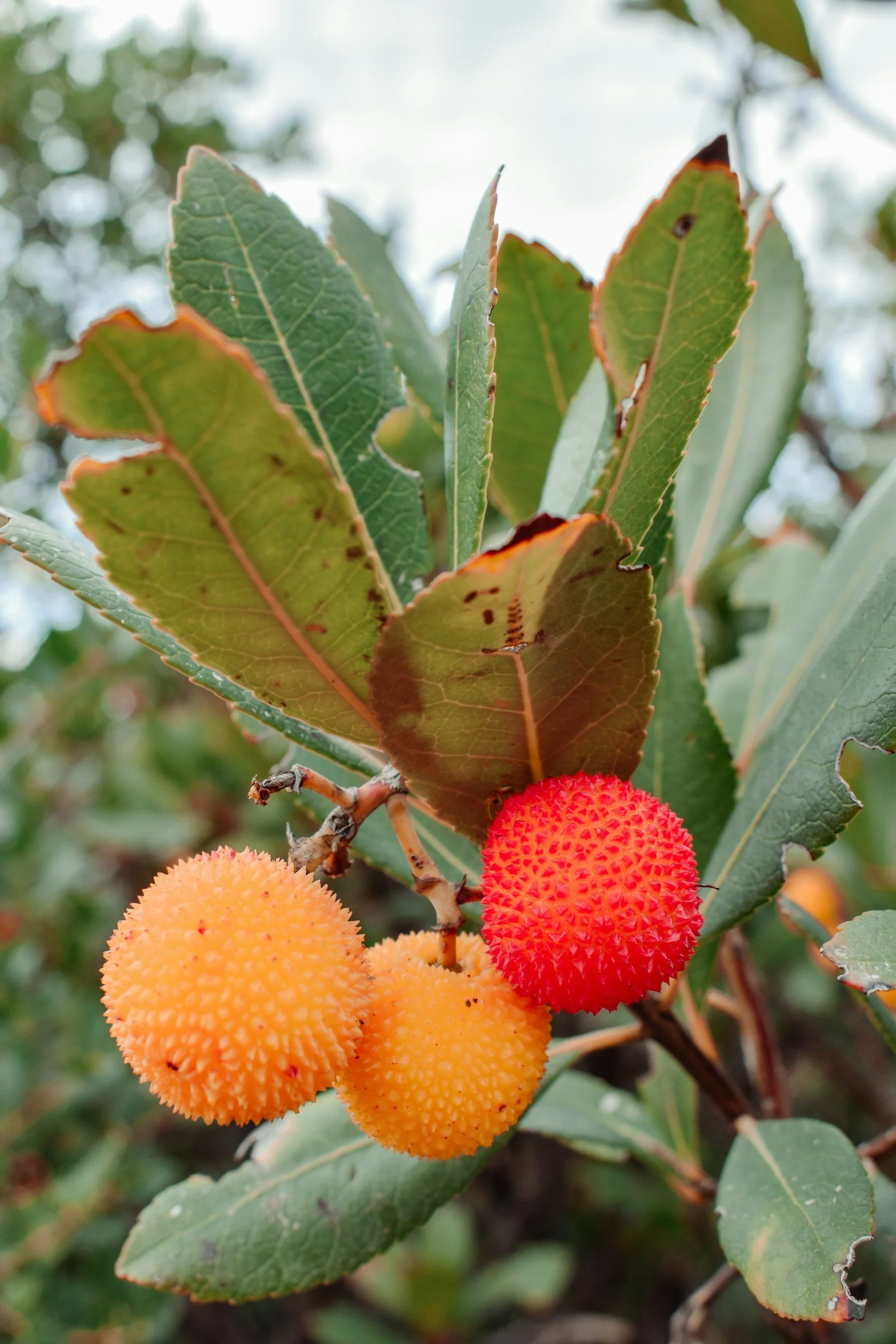
The Arbutus Philosophy
The arbutus is a remarkable tree.
It thrives along coastal bluffs, rooted in bare granite and shallow soil where other trees struggle. Its strength does not come from a single deep root going straight down, but from a broad network that reaches through difficult terrain to find stability where other trees cannot take hold.
Healthy small businesses survive and grow in much the same way. A business is not supported by a single structure, but by hundreds of everyday connections—the practical knowledge your team carries, the routines people follow, the decisions made on the fly, and the relationships built along the way. Individually, these details seem ordinary. Together, they form the operational root system of your business.
When too much relies on a single key person, an isolated spreadsheet, or an unwritten way of doing things, that root system becomes vulnerable. Strength comes from making those hidden dependencies visible so you can support your people, protect what you have built, and recognize when something is no longer working.
Every summer, the arbutus sheds its outer bark. It does not discard its trunk or its roots; it lets go of what no longer serves it, revealing the new layer growing underneath.
A healthy business must be able to do the same. Processes should not persist simply because “that is how we have always done it,” nor should change be forced simply for the sake of change. Improvement begins by understanding how work happens today, preserving what works, and being willing to shed the processes and habits that no longer serve the business.
As the arbutus grows, its form adapts to its surroundings. It bends, twists, and reaches around obstacles to find available light. Its irregular shape is not a defect. It is evidence that the tree has responded to its environment and kept growing.
There is no single right shape for a well-run business either. What works for a large corporate office may make little sense for a local fifteen-person team. Good operations should reflect your people, your culture, your resources, and the reality of how work actually gets done—not force your business into someone else’s idea of how it ought to run.
Preserve what works. Shed what no longer serves.
Adapt, recover, and grow.
Perhaps the most important lesson of the arbutus appears after serious disruption. Even when much of the visible tree is damaged or lost, an established arbutus can draw on the root system below to produce new growth.
That is how we think about operational resilience.
It does not mean pretending bad days will not happen. Key employees will move on. Technology will change. Suppliers will fail. Mistakes will happen. Owners will sometimes need to step away.
Resilience means building enough knowledge, capability, and support beneath the surface that a sudden change does not have to become a crisis. It means important knowledge can still be found, essential work can continue, and your team has the confidence to respond without everything depending on one person having the answer.
And when the business is ready to change or grow, it does not have to start again from the beginning. What you have learned, documented, improved, and shared becomes part of the foundation for what comes next.
Like the arbutus, a resilient business does not succeed because conditions are always favourable. It succeeds because it has built the capacity to adapt when they are not.
Anchor deeply. Understand what supports you. Preserve what matters. Shed what no longer serves you. Adapt to the conditions around you. Build the capacity to recover.
To grow, anchor deep.